Internal Gears and Ring Gears Made to Drawing
We shape internal gears, planetary ring gears and internally splined hubs – with flanges, bolt holes and external features machined in the same order.
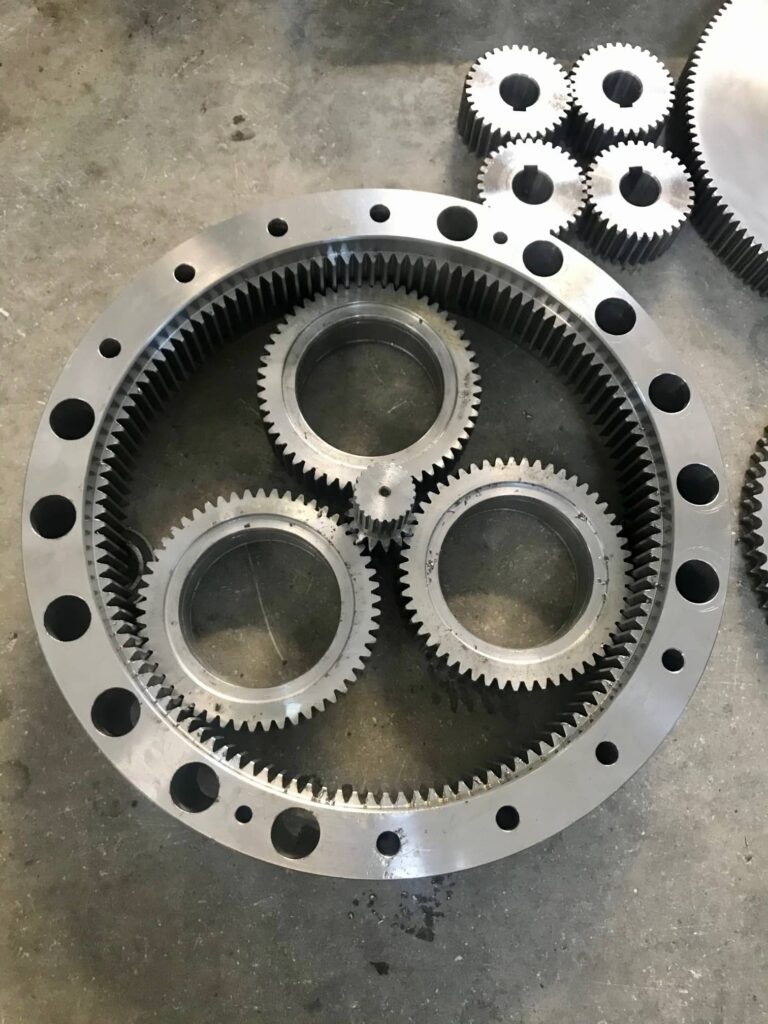
- Ø1,600 mmmax. internal gear
- Module 16max. module
- Shapinggear shapers
- DIN 5480internal splines
- 3.1certificates
Teeth on the Inside
An internal gear has its teeth cut on the inside of a ring. It meshes with a smaller external pinion turning in the same direction, which allows compact layouts – most importantly in planetary gearboxes, where the ring gear surrounds the planet gears.
Internal teeth cannot be hobbed with a standard hob, so they are produced by gear shaping. Our heavy gear shaper cuts the large rings, and smaller internal gears and splines on Lorenz and Henschel-Röber shapers.
At a glance
- Processgear shaping
- Shaper strokeup to 300 mm
- Materials42CrMo4, 34CrNiMo6, 31CrMoV9
- Hardeningnitriding, induction, Q+T
- Featuresflanges, bolt holes, splines
Internal Gear Variants
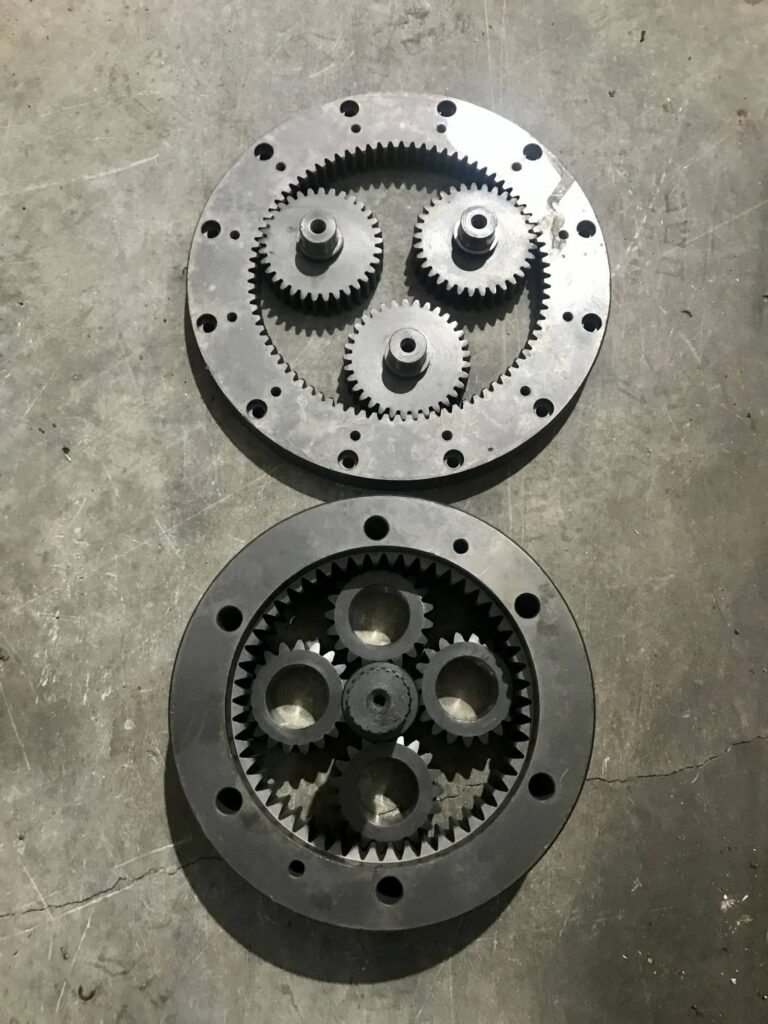
Planetary Ring Gears
Ring gears for planetary stages, with bolt-hole flanges or external splines to fix them in the housing.
- Shaped internal teeth
- Flanged or splined outer diameter
- Matched to sun and planets
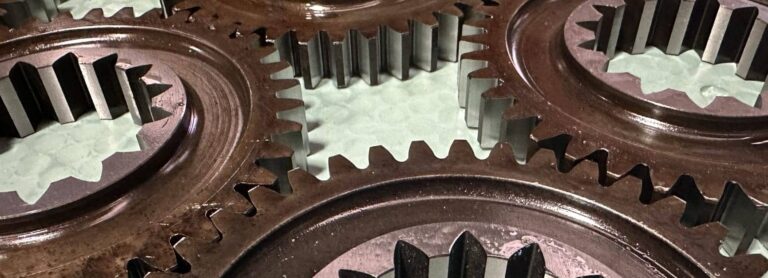
Internally Splined Gears and Hubs
Gears and hubs with internal involute splines to DIN 5480 or DIN 5482, for shaft connections in gearboxes.
- DIN 5480, DIN 5482, ANSI B92.1
- Fit class to drawing
- Checked with spline gauges
Large Internal Gears
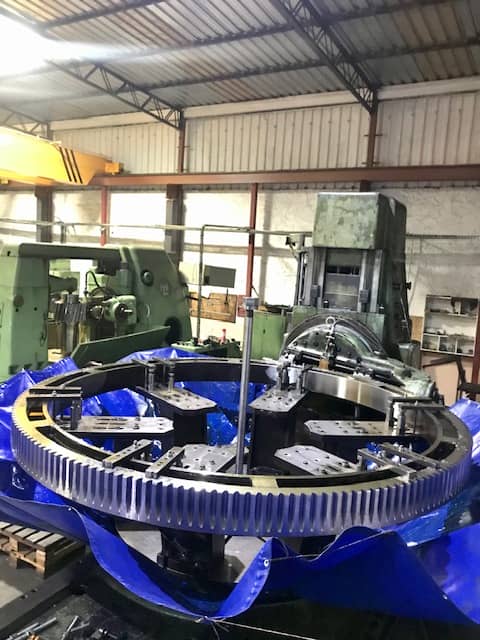
Large internal gears for slewing drives, mill drives and heavy machinery.
- Forged or rolled rings
- Induction-hardened teeth on request
- Bolt circles machined to drawing
Internal Gear Specifications: What Can We Make?
| Parameter | Range |
|---|---|
| Pitch diameter | up to Ø1,600 mm |
| Module | up to 16 |
| Face width | up to 300 mm shaping stroke |
| Tooth forms | involute spur and helical internal, splines |
| Spline standards | DIN 5480, DIN 5482, ANSI B92.1 |
| Materials | 42CrMo4, 34CrNiMo6, 31CrMoV9, 18CrNiMo7-6 |
| Heat treatment | nitriding, induction hardening, quench and temper |
| Checks | over-pin measurement, spline gauges, runout |
Ranges are typical. Send your drawing and we confirm feasibility for your exact part.
Why Are Ring Gears Often Nitrided?
Internal teeth are hard to grind after case hardening, so distortion must be kept small from the start. That is why many ring gears are made from nitriding steel such as 31CrMoV9 and gas nitrided after shaping – the surface becomes hard with very little change in shape.
For large, slow ring gears, induction hardening of the tooth flanks or through-hardened 42CrMo4 are proven alternatives. We follow the drawing and advise if you are unsure.
- Low-distortion nitriding
- Induction-hardened flanks
- Through-hardened Q+T steel
Where Are Internal Gears Used?
Industries that use our internal and ring gears: construction machinery · mining · steel and metal · power generation
Questions About Internal Gears
What is the largest internal gear you can make?
Up to Ø1,600 mm and module 16, with up to 300 mm face width.
How are internal gears inspected?
Typically by over-pin or over-ball measurement, runout and, for splines, go/no-go spline gauges. Gear measurement reports on request.
Can you make the complete planetary set?
Yes – see planetary gears for sun gears, planet gears and ring gears as matched sets.
Do you cut internal helical gears?
Yes, with helical guides on the gear shaper, to the helix angle on your drawing.
Internal Gears: Shaping, Heat Treatment and Inspection
Internal gears – also called ring gears or annulus gears – carry their teeth on the inner surface of a ring. They make compact, coaxial drives possible and are the outer member of every planetary gear set. Internally splined hubs, gear coupling sleeves and slewing rings use the same manufacturing principles.
Gear shaping
A gear shaper uses a pinion-shaped cutter that reciprocates along the tooth while cutter and workpiece rotate together. This generates the internal involute profile and works where a hob cannot reach. Our heavy gear shaper handles the largest rings; Lorenz and Henschel-Röber shapers produce smaller internal gears, splines and special profiles. See the machine park.
Material and hardening
Because internal teeth are difficult to grind, heat treatment is chosen to keep distortion low: gas nitriding of steels such as 31CrMoV9, induction hardening of the flanks, or through-hardened 42CrMo4 and 34CrNiMo6. Case-hardened ring gears are possible but require careful stock allowance and support during hardening.
Inspection
Internal gears are measured over pins or balls for tooth thickness, checked for runout against the outer diameter and flange, and – for splines – with go/no-go gauges to DIN 5480 or the specified standard. Material is traced to EN 10204 3.1 certificates.
Related parts
The shafts that mate with internal splines are covered on our splined shafts page, and complete gear sets on gearbox components. As a ring gear manufacturer in Türkiye, Nika Gears produces single replacements and series. Send your drawing for a quotation.
Send a gear drawing. Get an answer within 24 hours.
Include the PDF or STEP file, module or DP, number of teeth, material, heat treatment, accuracy grade and quantity. We reply with questions or a quotation.