Pinion Shafts With Integral Teeth
When the pinion is too small to sit on a separate shaft – or the drive needs maximum stiffness – the teeth are cut directly on the shaft. We turn, hob, harden and grind pinion shafts as one part.
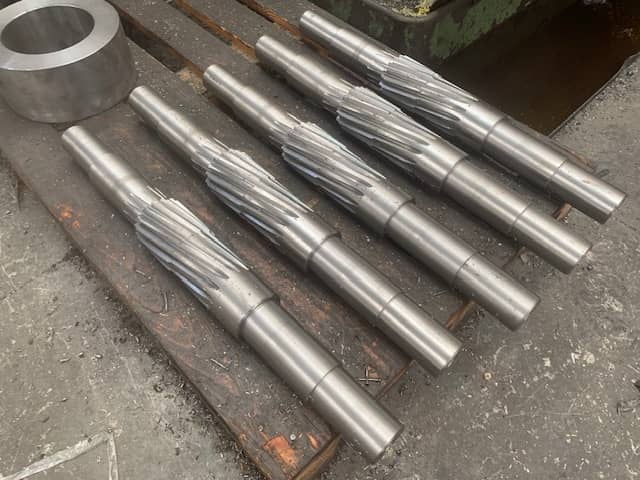
- 3,000 mmmax. shaft length
- 2,000 mmshaft hobbing length
- Spurhelical, bevel
- Groundteeth and seats
- 3.1certificates
Gear and Shaft in One Piece
A pinion shaft – or gear shaft – carries its teeth on the shaft itself. There is no keyway or press fit between gear and shaft, so the part is stiffer, more compact and able to transmit more torque. Pinion shafts are the input stage of most gearboxes and the driving member of many mill, crane and rack drives.
Nika Gears manufactures spur, helical, double helical and bevel pinion shafts with bearing seats, splines, keyways and threads as drawn – turned, cut, hardened and ground in one controlled route.
At a glance
- Teethspur, helical, double helical, bevel
- Shaft featuresseats, splines, keyways
- Materials18CrNiMo7-6, 34CrNiMo6
- Hardeningcase, induction, nitriding
- Finishground teeth and seats
Pinion Shaft Variants
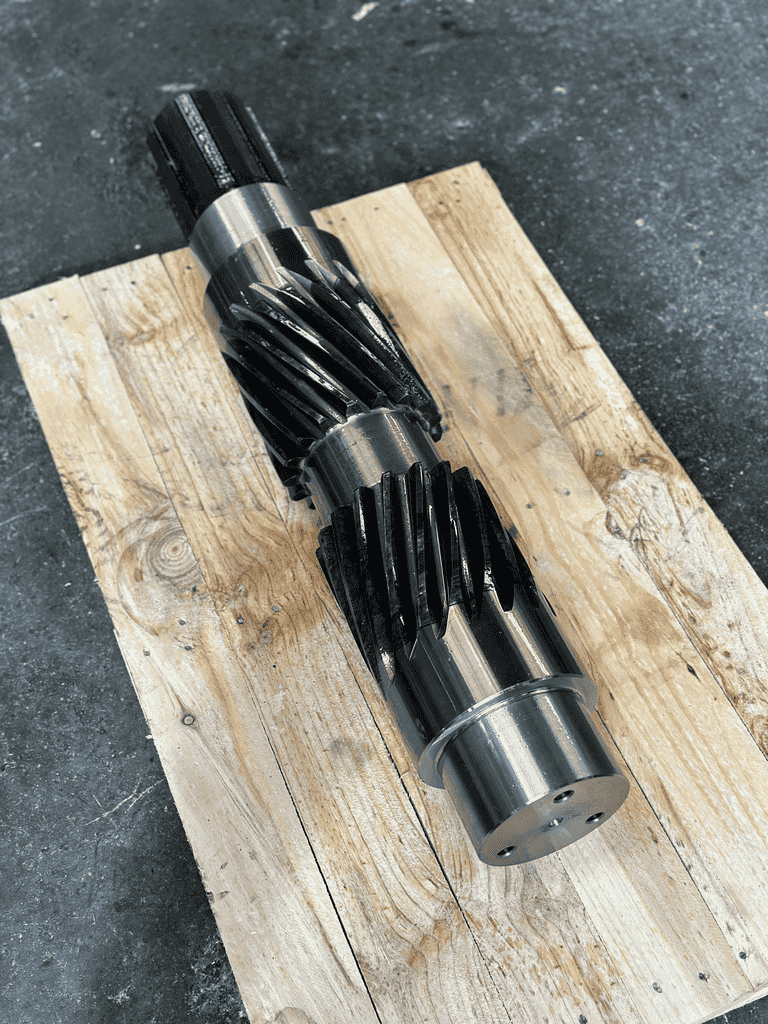
Helical Pinion Shafts
Input pinions for helical gearboxes, case hardened and profile ground for quiet running at high speed.
- Helix angle and hand to drawing
- Lead crowning on request
- Ground bearing seats
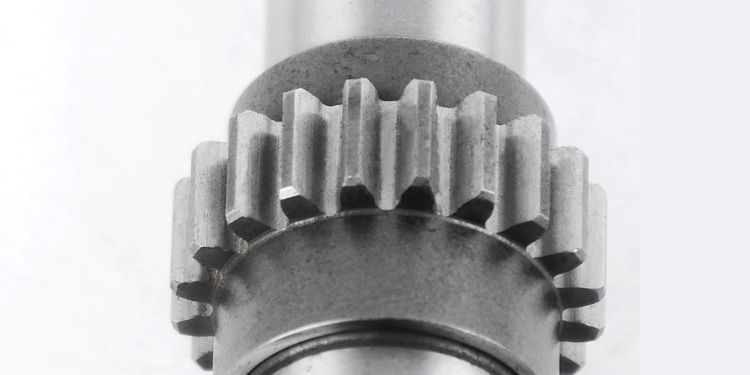
Spur Pinion Shafts
Spur pinions on shafts for parallel-shaft gearboxes, rack drives, crane and winch drives.
- Hobbed or shaped teeth
- Shoulder gears shaped
- Keyed or splined ends
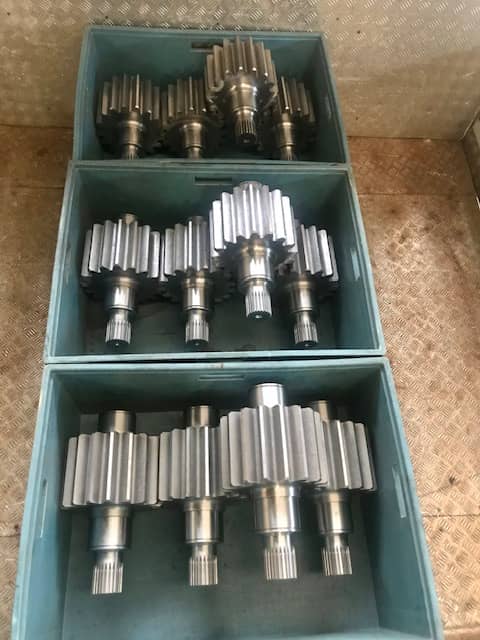
Pinion Shafts in Series
Repeat batches of pinion shafts for OEM gearbox and machine production, packed for transport.
- Consistent batch quality
- Batch inspection reports
- Protective packing
Pinion Shaft Specifications: What Can We Make?
| Parameter | Range |
|---|---|
| Overall length | up to 3,000 mm, turned up to Ø800 mm |
| Tooth length on shaft | horizontal hobbing up to 2,000 mm |
| Tooth types | spur, helical, double helical, straight bevel |
| Module | up to 12 on horizontal shaft hobbing; larger by vertical hobbing |
| Shaft features | bearing seats, splines, keyways, threads, centre holes |
| Materials | 18CrNiMo7-6, 20MnCr5, 17CrNiMo6, 34CrNiMo6, 42CrMo4 |
| Heat treatment | case hardening, induction hardening, nitriding |
| Grinding | gear profile and cylindrical grinding of seats |
Ranges are typical. Send your drawing and we confirm feasibility for your exact part.
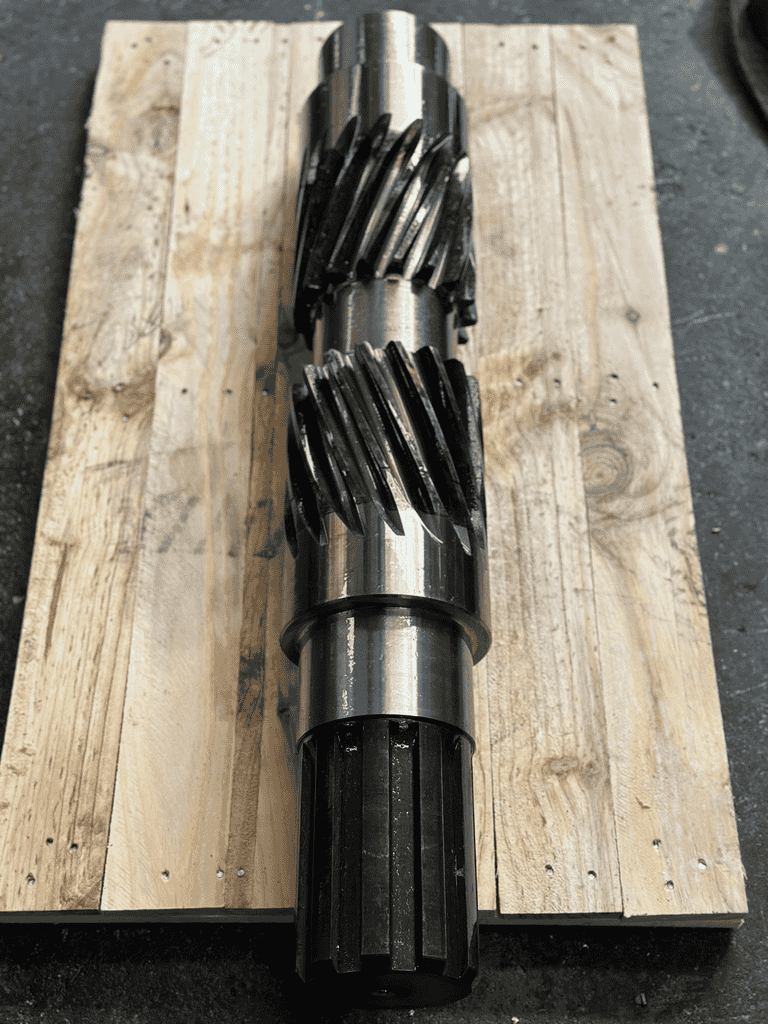
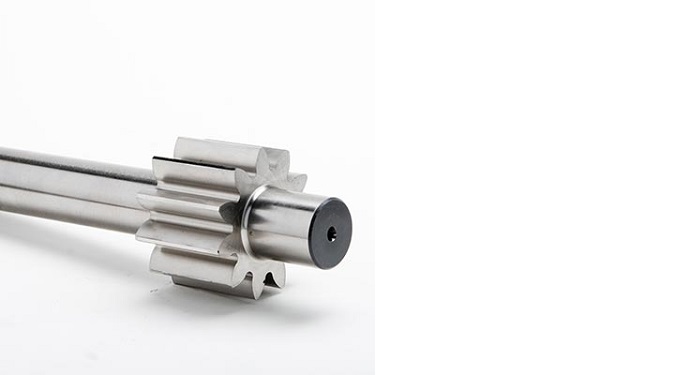
Pinion Shafts From Production
Where Are Pinion Shafts Used?
Industries that use our pinion shafts: mining · steel and metal · sugar · construction machinery
Questions About Pinion Shafts
Why choose a pinion shaft instead of a gear on a shaft?
When the pinion is small, the teeth would leave too little material above a keyway. Cutting the teeth on the shaft gives a stiffer, stronger, more compact part.
How long can your pinion shafts be?
Up to 3,000 mm overall, with teeth hobbed on horizontal machines up to 2,000 mm length.
Do you grind the bearing seats?
Yes. Bearing seats and the teeth are ground after hardening where the drawing requires it.
Can you make bevel pinion shafts?
Yes – see bevel gears.
Pinion Shafts: Why Gear and Shaft Are Made as One
In most gearboxes the smallest gear – the pinion – is also the most heavily loaded, because it makes the most revolutions. When the pinion diameter gets close to the shaft diameter, there is no room for a bore and keyway. The answer is a pinion shaft: the teeth are cut directly on the shaft, giving the strongest and stiffest possible connection.
Manufacturing route
A pinion shaft starts as a forging or bar of case-hardening or through-hardening steel. It is turned between centres, then the teeth are hobbed – on a horizontal hobbing machine for long shafts – or shaped when a shoulder is close to the teeth. Splines and keyways are cut, and threads and centre holes finished.
After case hardening or induction hardening, the teeth are profile ground and the bearing seats are cylindrically ground so the gear runs true to its bearings. This is where pinion shafts differ most from loose gears: the relationship between teeth and seats is fixed in one part.
Tooth types
We make spur, helical and double helical pinion shafts, and straight bevel pinion shafts. For shafts that carry splines rather than teeth, see splined shafts and transmission shafts.
Inspection
Teeth are measured for profile, lead and runout relative to the bearing seats, and seat diameters are checked against their tolerance. Hardness and case depth are reported and material is traced to its EN 10204 3.1 certificate.
As a pinion shaft manufacturer in Türkiye, Nika Gears supplies single replacements and series. Send your drawing.
Send a gear drawing. Get an answer within 24 hours.
Include the PDF or STEP file, module or DP, number of teeth, material, heat treatment, accuracy grade and quantity. We reply with questions or a quotation.