Gear Materials and Heat Treatment: A Buyer’s Guide
Material and heat treatment decide how much load a gear carries and how long it lasts. This guide compares the common gear steels and hardening methods, so you can check what is on your drawing or decide what should be.
- 16MnCr5 · 18CrNiMo7-6case-hardening steels
- 42CrMo4 · 34CrNiMo6through-hardening steels
- 58 – 62 HRCtypical case-hardened surface
- CuSn12bronze for worm wheels
Why Are Gears Heat Treated?
A gear tooth has two jobs. The flank must resist contact pressure and wear, which calls for a hard surface. The tooth root must take bending and shock without cracking, which calls for a tough core. Heat treatment is how one piece of steel gets both.
The choice is always a trade. Deeper and harder cases carry more load, but the processes that produce them also distort the gear, and distortion has to be ground away. Low-distortion processes keep the geometry but give a thinner hardened layer.
That is why material, hardening method, accuracy grade and finishing process are decided together, not one after the other.
Four routes and one exception
- Case hardeninghighest load capacity
- Induction hardeninglarge gears and racks
- Nitridinglowest distortion
- Quench and tempersimple and machinable
- Bronzeworm wheels
Which Heat Treatment for Which Gear?
Typical values for industrial gears. The drawing or the gear calculation has the final word.
| Heat treatment | Typical steels | Typical surface hardness | Distortion | Typically used for |
|---|---|---|---|---|
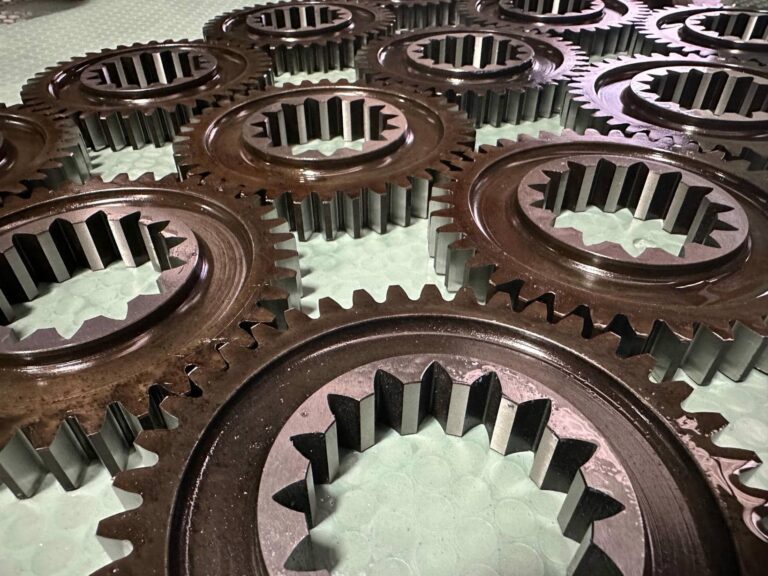
| Case hardening (carburising) | 16MnCr5, 20MnCr5, 18CrNiMo7-6 | 58 – 62 HRC | Highest; flanks usually ground | Highly loaded gearbox gears and pinions |
| Induction hardening | 42CrMo4, C45 | 50 – 58 HRC | Moderate | Large gears, racks, slewing rings |
| Nitriding | 42CrMo4, 31CrMoV9 | Hard, thin layer, measured in HV | Very low | Ring gears, internal gears, thin-walled parts |
| Quench and temper | 42CrMo4, 34CrNiMo6 | 28 – 36 HRC through the section | Low; teeth cut after treatment | Moderately loaded gears, shafts, large wheels |
Bronze worm wheels are a separate case: CuSn12 or aluminium bronze runs against a hardened, ground steel worm. See worm gears.
Which Steel Grades Are Used for Gears?
Case-hardening steels
16MnCr5 and 20MnCr5 are the standard choice for small and medium gears. For large modules and thick sections, 18CrNiMo7-6 hardens more deeply and gives a tougher core, which is why it is specified for heavy-duty gearboxes.
Through-hardening steels
42CrMo4 is the all-round steel for quenched and tempered gears and shafts, and it can be induction hardened or nitrided afterwards. 34CrNiMo6 is used where larger cross-sections need strength right through.
Bronze
Worm wheels are made from tin bronze such as CuSn12, or from aluminium bronze for higher loads at low speed, usually as a rim on a steel or cast hub.
Forging, bar or plate
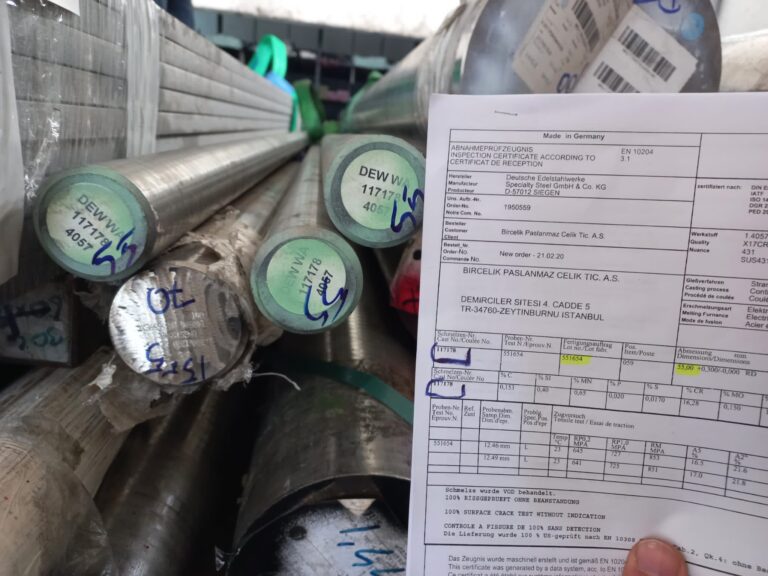
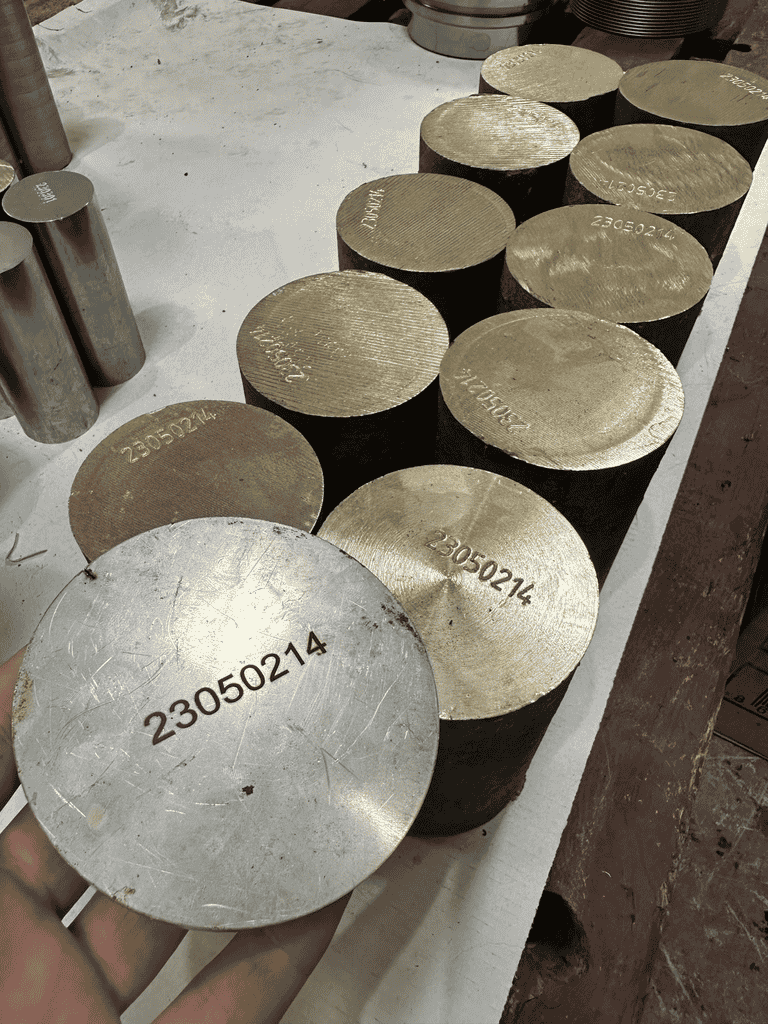
Small gears are cut from bar. Larger and more highly loaded gears start as forgings, which give a better grain structure. In every case the material should arrive with an EN 10204 3.1 certificate and stay traceable to the part by heat number.
What Should the Drawing Say About Heat Treatment?
- Steel gradeName the grade, for example 18CrNiMo7-6 or 42CrMo4.
- ProcessCase hardened, induction hardened, nitrided or quenched and tempered.
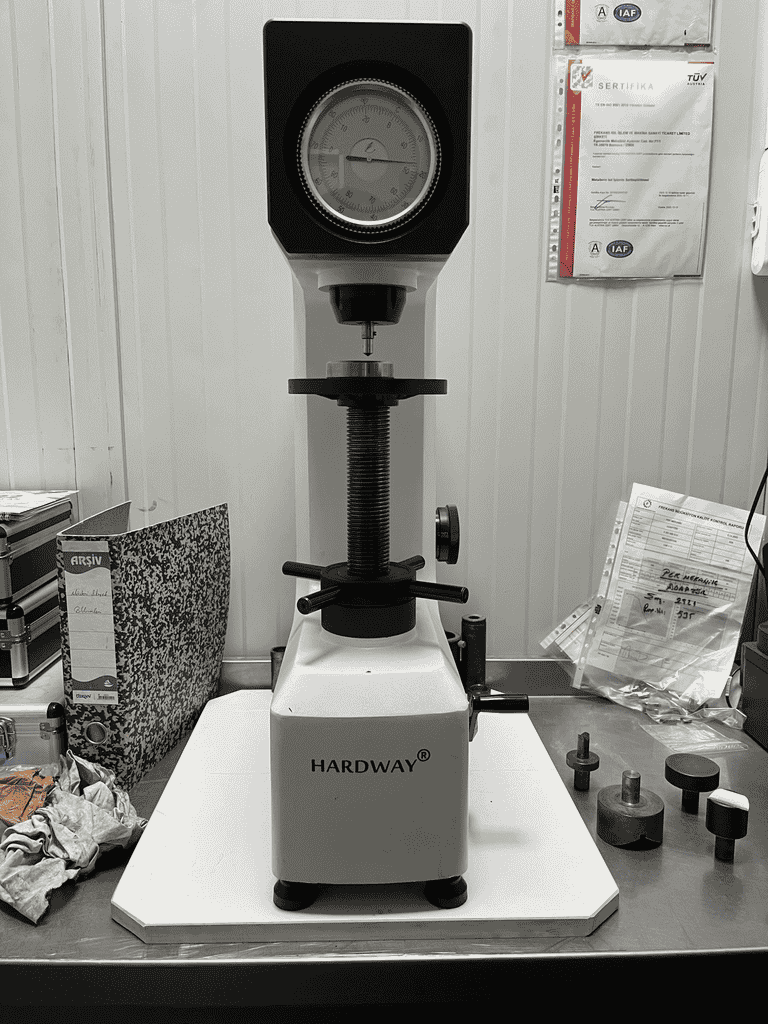
- Surface hardnessA range such as 58 – 62 HRC, and where it is measured.
- DepthEffective case depth after grinding for carburised gears; hardening depth for induction; layer depth for nitriding.
- CoreCore hardness or tensile strength where the gear calculation needs it.
Questions About Gear Materials
What is the best steel for gears?
There is no single best steel. Case-hardening steels such as 16MnCr5 and 18CrNiMo7-6 give the highest load capacity. 42CrMo4 is the common choice for quenched and tempered, induction-hardened or nitrided gears. The right one depends on load, size and the accuracy you need.
Case hardening or induction hardening?
Case hardening gives a hard case around the whole tooth and the highest load capacity, but the gear normally has to be ground afterwards. Induction hardening treats only the teeth, distorts less and suits large gears and racks.
When is nitriding the better choice?
When distortion must stay minimal and the part cannot easily be ground, for example internal ring gears and thin-walled gears. The hardened layer is thin, so nitriding suits moderate contact loads.
Can you change the material of an old gear?
Yes. If a gear failed early, we can suggest a different steel or heat treatment for the new part and agree it with you before production.
Which documents prove material and hardness?
An EN 10204 3.1 material certificate and a heat-treatment report with surface hardness, core hardness and case depth. See our quality page.
Not sure what your old gear was made of?
Send the part or photos. We propose material and heat treatment for the new gear with the quotation.
Send a gear drawing. Get an answer within 24 hours.
Include material, heat treatment, hardness, accuracy grade and quantity. We reply with questions or a quotation.