Gear Hobbing, Shaping or Grinding: Which Process for Which Gear?
How a gear is cut decides which shapes are possible, how accurate the teeth are and what the part costs. This guide explains the main processes in plain terms, so you can read a quotation and design parts that are easy to make.
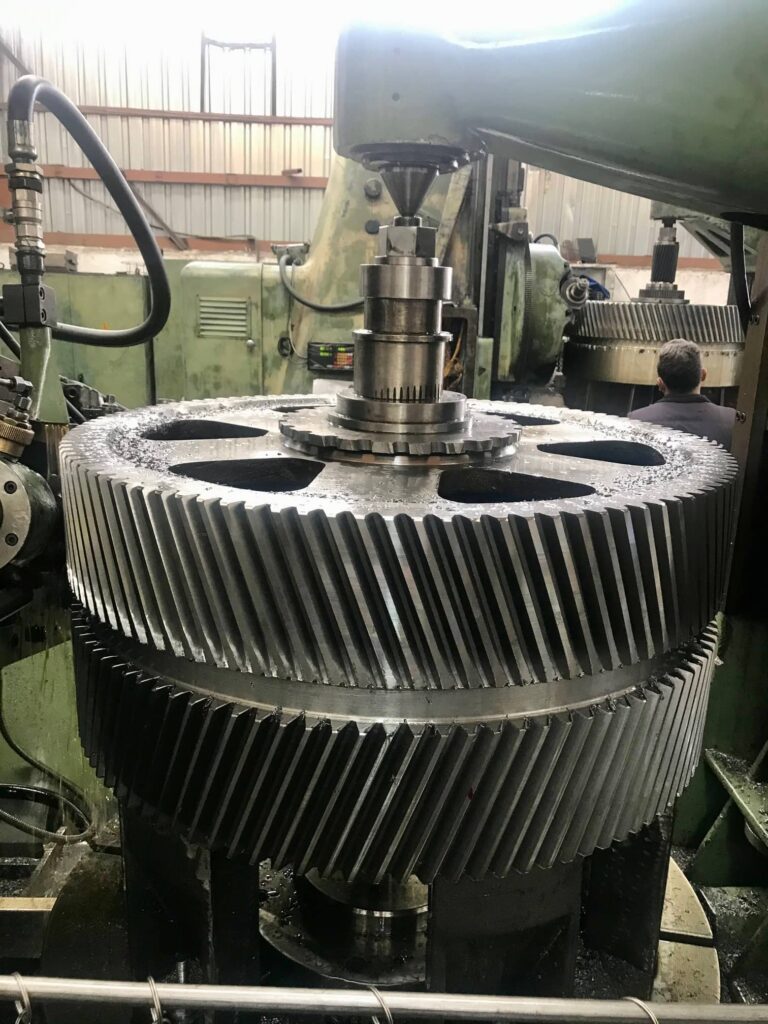
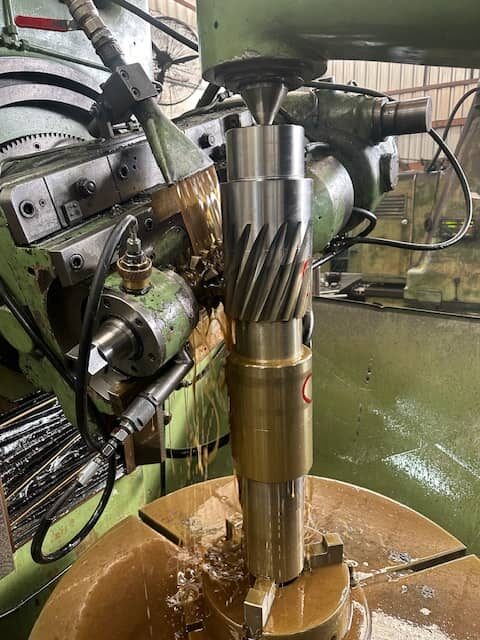
- Hobbingexternal gears and splines
- Shapinginternal and shoulder gears
- Rack millingstraight and helical racks
- Grindingafter hardening
How Are Gear Teeth Cut?
Most industrial gears are generated: the cutting tool and the gear blank roll together as if they were meshing, and the tool cuts the involute tooth shape as it goes. Hobbing and shaping both work this way, with different tools.
After cutting, many gears are hardened. Heat treatment moves the geometry, so gears that need fine accuracy are ground afterwards.
Knowing which process your gear needs explains most of the price, and sometimes a small design change moves a part from a slow process to a fast one.
Route of a hardened, ground gear
- 1Blank turning
- 2Hobbing or shaping
- 3Heat treatment
- 4Bore and face grinding
- 5Tooth grinding
- 6Gear measurement
Which Process Cuts Which Gear?
| Process | How it works | Best for | Limits |
|---|---|---|---|
| Gear hobbing | A rotating, worm-shaped hob cuts continuously while the blank turns | External spur and helical gears, pinion shafts, splines, worm wheels | No internal teeth; needs run-out space beside the teeth |
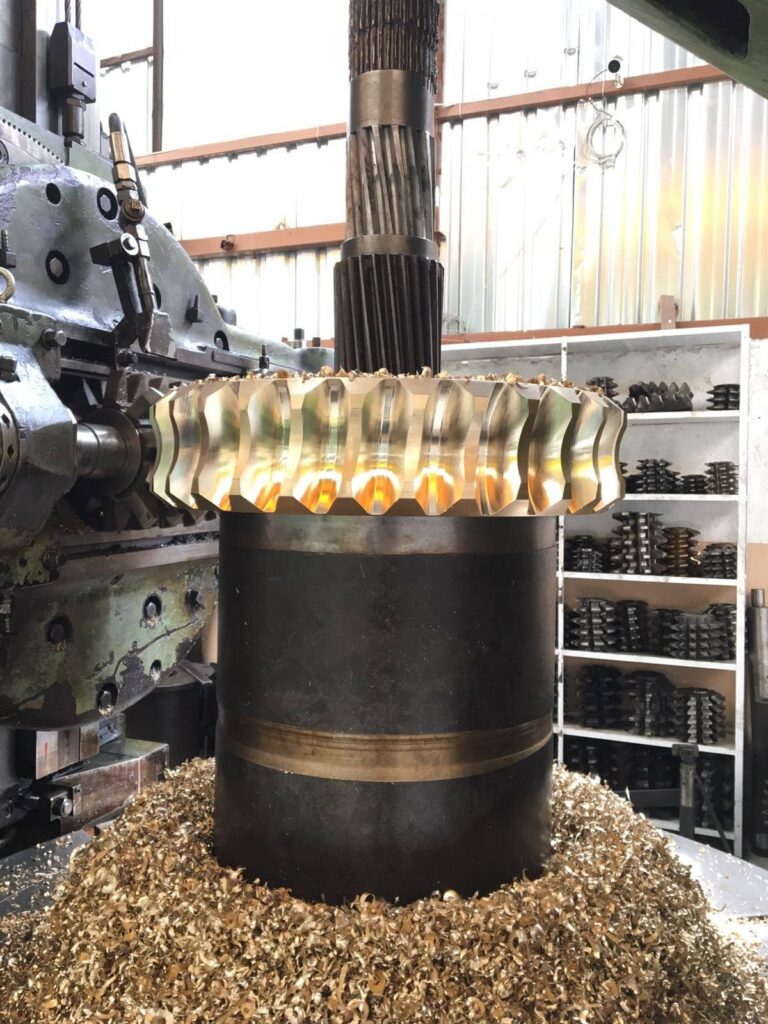
| Gear shaping | A pinion-shaped cutter moves up and down while cutter and blank roll together | Internal gears, gears next to a shoulder, cluster gears, internal splines | Slower than hobbing |
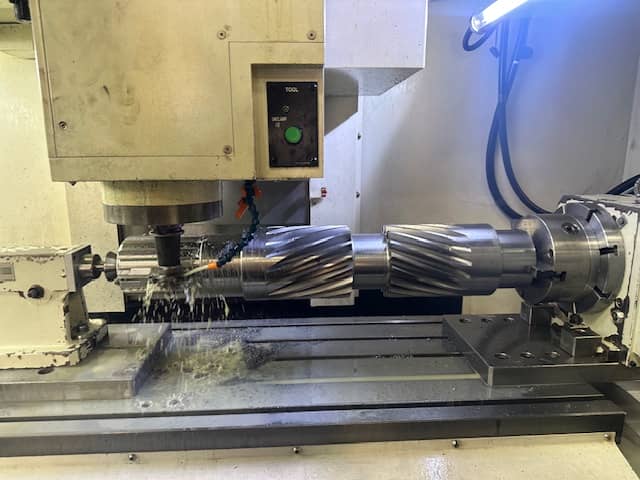
| Rack milling | A milling cutter cuts tooth after tooth along the bar | Straight and helical gear racks | Length limited by the machine |
| Profile grinding | A profiled grinding wheel finishes each tooth gap after hardening | Case-hardened gears at fine accuracy grades; tip relief and crowning | Adds an operation and inspection |
| Worm grinding | A grinding wheel follows the thread of the hardened worm | Worms for quiet, efficient worm drives | Worms only |
What Happens to a Gear Between Blank and Box?
- Blank turningThe forging or bar is turned, with bore and faces true to each other.
- Gear cuttingTeeth are hobbed or shaped, with stock left on the flanks if the gear will be ground.
- Heat treatmentCase hardening, induction hardening, nitriding or quench and temper, to the drawing.
- GrindingBores, seats and, where specified, the tooth flanks are ground after hardening.
- InspectionGear geometry, hardness and dimensions are measured and reported.
How Does the Process Affect Your Design?
Leave room for the hob
A hob needs space to run out at the end of the teeth. If a gear sits directly against a larger shoulder, it cannot be hobbed and has to be shaped, which takes longer. A relief groove or a little more distance to the shoulder often solves it.
Internal teeth are shaped
Ring gears and internal splines are cut on gear shapers. In a blind bore the cutter needs a clearance groove at the end of its stroke, so include one on the drawing. See internal and ring gears.
Hardened and accurate means ground
If the drawing asks for case-hardened teeth at a fine accuracy grade, the flanks will be ground. If the duty allows nitriding or a coarser grade, the gear can be finished by cutting alone. Our guide to gear accuracy grades explains the difference.
Double helical gears
Double helical gears normally need a gap between the two helices for the tool. The gap width belongs on the drawing. See herringbone and double helical gears.
The machines behind these processes are listed, with their capacities, on our machine park page.
Questions About Gear Cutting Processes
What is the difference between gear hobbing and gear shaping?
Hobbing cuts with a rotating, worm-shaped hob in a continuous motion and is the fastest way to make external gears. Shaping cuts with a reciprocating cutter shaped like a pinion and can reach internal teeth and teeth next to a shoulder, where a hob cannot go.
Is gear grinding always necessary?
No. Grinding is needed when a hardened gear must reach a fine accuracy grade or needs profile corrections. Many through-hardened, nitrided or induction-hardened gears are finished by hobbing or shaping.
Can internal gears be hobbed?
Not on standard hobbing machines. Internal gears and internal splines are normally shaped.
How are gear racks made?
Racks are milled on a rack milling machine, tooth by tooth along the bar, as straight or helical racks. See gear racks.
Which gear cutting process is cheapest?
For external gears, hobbing. Cost rises with each added operation: shaping instead of hobbing, heat treatment, and grinding after hardening.
See the machines
Hobbing machines, gear shapers, grinders and lathes with their capacities.
Send a gear drawing. Get an answer within 24 hours.
We tell you which processes your part needs and quote the complete component, not only the tooth cutting.